Want to be in the loop?
subscribe to
our notification
Business News
VIETNAM LIKELY TO SCRAP VISAS FOR UK, FRANCE, AUSTRALIA AND MORE
Prime Minister Nguyen Tan Dung approved many propositions of the two agencies during a government meeting late last month, bringing about hopes that Vietnam would soon be able to lure back international visitors.
The Ministry of Culture, Sports, and Tourism has proposed scrapping visas for countries that are Vietnam’s key tourism markets, or those it has strategic or comprehensive partnerships with, which has secured in-principle approval from the premier.
The countries that are likely to enjoy free-visa rules from Vietnam are the UK, France, Germany and Spain, which have strategic partnerships with Vietnam; and Australia, New Zealand and Canada, the Southeast Asian country’s comprehensive partners, according to newswire Van Hoa (Culture) Online.
“Tourists from these countries will be given a 15-day stay for each entry over five years,” Van Hoa Online quoted VNAT chief Nguyen Anh Tuan as saying.
The visa waivers for the first group of countries are expected to take effect on July 1 this year, and the second group, July 1 next year, according to the VNAT director.
Vietnam currently applies one-sided free-visa rules for seven countries, including Japan, South Korea, Norway, Finland, Denmark, Sweden, and Russia, and scraps visas for nine Southeast Asian countries including Brunei, Myanmar, Cambodia, Indonesia, Laos, Malaysia, Thailand, Singapore, and the Philippines.
Starting next month, Vietnam will also waive visas for tourists from Belarus, according to a resolution the government released earlier this month.
The waiver will be applied within five years, from July 1, 2015 to June 30, 2020, with an allowed stay of 15 days for each entry.
Tourists from the Asia-Pacific region accounted for 72 percent of international arrivals to Vietnam, followed by Europe (14 percent) and North America, according to a VNAT survey.
The government approval of the visa waiver proposal is seen by industry insiders as “an invitation to international tourists who love to explore Vietnam,” and a boost to the country’s tourism.
The visa waivers granted to Russia, Japan, and South Korea have indeed paid off, as vacationers from these countries collectively made up 23.6 percent of Vietnam’s tourist arrival numbers in 2014, according to the same VNAT data.
Vietnam scrapped visas for Japan and South Korea in 2004, and the number of holidaymakers from these countries has since increased 2.4 times and 3.6 times, respectively.
The number of Russian tourists visiting Vietnam in 2014 was 7.45 times higher than in 2009, when they began enjoying visa waivers from the country.
Nguyen Huu Tho, chairman of the Vietnam Travel Association, said waiving visas for more countries is inevitable at a time when Vietnam is struggling to compete with other regional tourism destinations.
Hoang Huu Loc, chairman of the board of members of Saigontourist, a leading tour operator in Ho Chi Minh City, said Vietnam should also scrap visas for nations that have non-stop flights to the country.
Free-visa rules will encourage international vacationers to come to Vietnam, and having a non-stop service there is a plus, he said.
Source: VIR
Related News
VIETNAM ECONOMY INVESTMENT
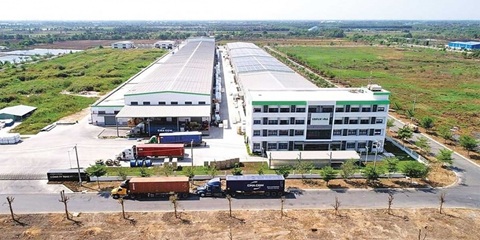
FOREIGN INVESTORS SEEKING A SYNCHRONISED MANUFACTURING ECOSYSTEM
Instead of focusing only on land costs and incentives as usual, foreign investors are seeking a synchronised manufacturing ecosystem, from stable power supply and logistics to shared infrastructure and the convenience of completing residence procedures for experts to serve their long-term investment in the country.
INFRASTRUCTURE / CONSTRUCTION / LOGISTIC / PORT
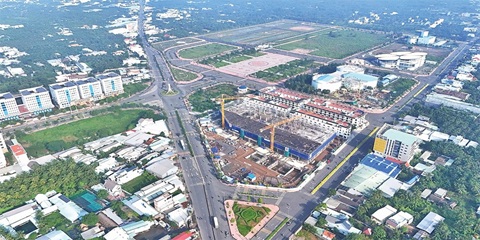
DONG THAP PROVINCE STEPS UP INDUSTRIAL EXPANSION AND INFRASTRUCTURE CONNECTIVITY
Accelerating public investment, strengthening inter-regional connectivity, and expanding industrial land are helping Dong Thap efficiently bolster competitiveness and drive economic growth. Following the 2025 merger of the former Dong Thap and Tien Giang provinces, the expanded Dong Thap province in the Mekong Delta faces mounting pressure to accelerate infrastructure development and strengthen connectivity among local economic zones, urban areas, industrial parks (IPs), and production centres.
PROPERTY / INDUSTRIAL ZONE
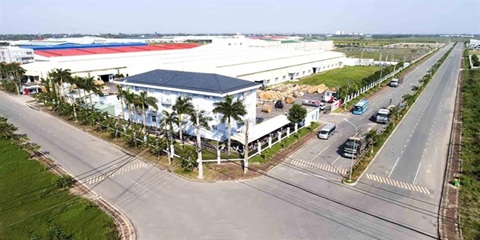
HCM CITY ATTRACTS US$5.7 BILLION INTO EXPORT PROCESSING AND INDUSTRIAL ZONES
HCM City attracted US$5.7 billion in domestic and foreign investment into its export processing and industrial zones during the first nine months of 2026. The figure exceeded the city's full-year target by 31 per cent, highlighting strong momentum in high-quality industrial investment under Resolution No.10-NQ/TW. Total investment reached 131 per cent of the 2026 target of $4.25 billion and represented a 29 per cent increase compared with the same period in 2025, according to the city's Export Processing and Industrial Zones Authority (HEPZA).
BANKING / FINANCE / INSURANCE / TAX
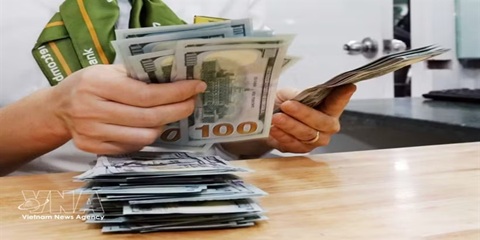
REMITTANCES TO HCM CITY RISE NEARLY 40% IN Q3
Remittances to HCM City reached more than US$2.83 billion in the third quarter of this year, up 39.5 per cent from the previous quarter and 3.6 per cent year-on-year. This was the first quarter showing positive annual growth this year, helping narrow the decline in remittance inflows over the first nine months. According to the State Bank of Vietnam (SBV)’s Regional Branch 2, remittances transferred to HCM City through credit institutions and economic organisations totalled $2.835 billion in Q3, an increase of more than $802 million from the previous quarter.
VIETNAM ECONOMY INVESTMENT
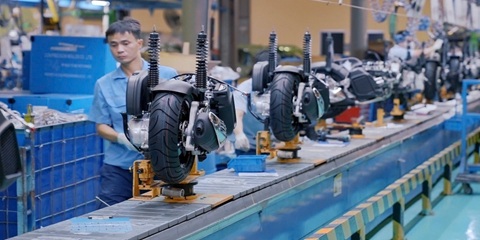
LOCALITIES REPORT BREAKTHROUGH RESULTS IN FDI IN FIRST NINE MONTHS
In Ho Chi Minh City, total registered capital reached $17.2 billion in the first nine months, up 4.2 times from the same period last year. The figure included more than $9.35 billion in newly registered capital and over $4.9 billion in additional capital for existing projects. Foreign investors also registered more than $2.9 billion through capital contributions and share purchases.
TECHNOLOGY
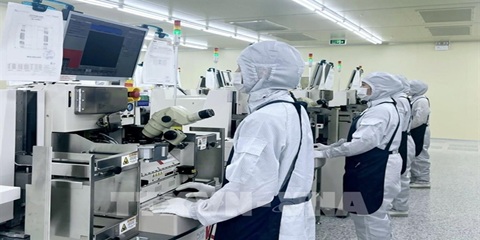
TECH SECTOR GROWTH OPENS UP OPPORTUNITIES FOR VIỆT NAM TO GO GLOBAL
The growth of the electronics, semiconductor and high-tech sectors worldwide is opening up a variety of opportunities for Vietnamese enterprises to integrate more deeply into the global supply chain. However, to become suppliers for these corporations, domestic enterprises must meet rigorous standards regarding quality, technology, productivity and order fulfilment capabilities.
Events Sponsors






















